












It’s not just takeout containers and teabags.
Microplastics have infiltrated practically every nook of our lives, including our diets, with Americans estimated to devour hundreds of these pesky particles each yr.
But some on a regular basis staples are worse offenders than others.
Scientists have recognized the three prime protein sources with the highest ranges of microplastic contamination — and discovered that switching manufacturers or grocery shops may not do much to decrease the quantity that ends up on your plate.
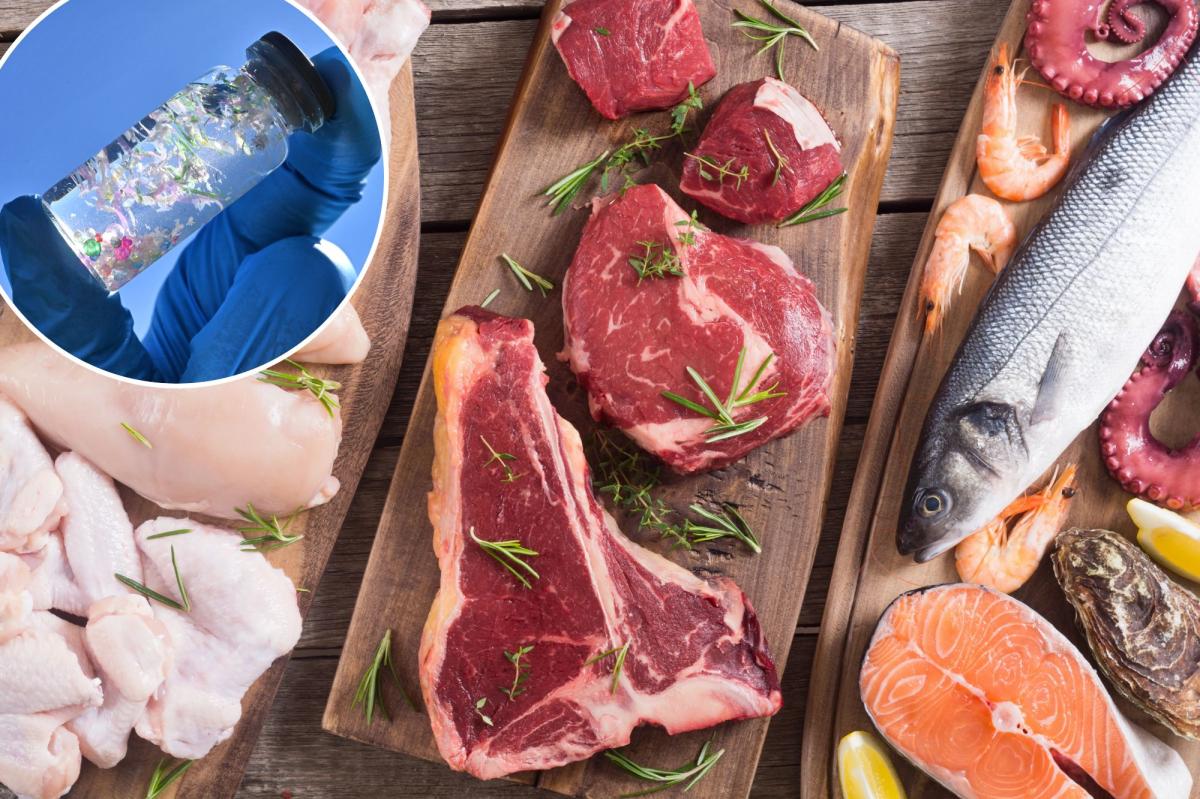
Microplastics are tiny items of plastic measuring less than 5 millimeters in measurement. MargJohnsonVA – inventory.adobe.com
In the research, researchers at the University of Toronto and Ocean Conservatory examined 16 sorts of generally consumed protein merchandise, including seafood, poultry, beef, pork and plant-based alternate options.
The samples were bought from two standard supermarkets and one grocery retailer specializing primarily in pure and natural merchandise in the Portland, Oregon, space. Researchers also purchased fresh-caught seafood instantly from fishing boats.
In a lab, they used chemical options to break down the meals itself, leaving only plastic particles behind. They then filtered the remaining materials and examined it under microscopes.
The researchers discovered that 88% of the 111 meals samples they examined contained microplastics, with at least one contaminated pattern discovered among each of the 16 protein sorts.
“There’s no escaping them no matter what you eat, it seems,” Dr. Britta Baechler, a marine biologist and co-author of the research, said in a press launch.
Breaded shrimp topped the checklist of most contaminated merchandise, containing an common of 370 microplastic particles per serving.
Plant-based nuggets came in second, averaging 73 particles, adopted by standard hen nuggets at 62 particles for a typical serving to.
Highly processed meals, like breaded shrimp, contained the biggest quantity of microplastic contamination, researchers discovered. ritablue – inventory.adobe.com
Pollock fish sticks and plant-based fish sticks rounded out the prime 5, containing averages of 58 and 46 particles per serving, respectively.
At the other finish of the spectrum, hen breast had the lowest quantity, averaging just two particles per serving. Pork loin chops adopted with 4, tofu with seven, minimally processed Alaska pollock with 9, and fresh-caught White Gulf shrimp with 10.
The findings counsel that the means meals is processed may play a main position in microplastic contamination, with extremely processed merchandise containing considerably more particles per gram than minimally processed ones.
But it doesn’t inform the entire story. Researchers also detected microplastics in fresh-caught seafood, indicating that plastic can enter the meals provide lengthy before merchandise attain the grocery retailer.
“It’s tempting to want to draw conclusions like ‘eat less of this and more of that’ to avoid microplastics in your diet; but right now we still know very little about the microplastic burdens in commonly consumed foods,” said Madeleine Milne, lead creator of the research.
“Our study adds to this knowledge but also demonstrates the need for further research to better understand the bigger picture, including where these microplastics are coming from and the potential human health risks.”
Of the 16 protein sorts analyzed in the research, all contained some degree of microplastic contamination. whitestorm – inventory.adobe.com
To get an concept of how much plastic Americans might be consuming, the researchers mixed their findings with dietary survey knowledge collected from practically 2,000 US adults.
They estimated that the common US grownup consumes roughly 11,000 microplastic particles yearly from the protein merchandise included in their calculations.
But some folks could be swallowing a entire lot more than others. Using the highest ranges of microplastics discovered in each protein class, alongside with common consumption charges, the group estimated that publicity could climb to as much as 3.8 million particles a yr.
“This is a startling reminder of just how prolific plastic pollution has become,” said Baechler, who serves as affiliate director of plastics sciences at Ocean Conservancy.
Microplastics are now widespread all through the atmosphere, having been detected in the air we breathe, the water we drink and a rising vary of on a regular basis merchandise.
These tiny plastic particles, measuring less than 5 millimeters in measurement, have turned up in human blood, saliva, placentas, testicles, livers, kidneys and even brains, among other organs and tissues.
What occurs once they enter the physique stays a query of fierce debate. Studies have instructed that microplastics may set off irritation, injury cells, disrupt hormones and throw off the steadiness of micro organism in the intestine.
Over time, these results could take a toll on our well being. Researchers have discovered that they may enhance the threat of cardiovascular issues, reproductive points, neurodegenerative illnesses and certain cancers.
Source hyperlink