






Millennials may have mortgages, six-figure salaries, and youngsters of their own — but apparently, nothing makes them revert to being delinquent 15-year-olds fairly like going house for the holidays.
After spending a whole lot of {dollars} on airfare, burning valuable PTO, and schlepping back to their hometowns to spend high quality time with their households, some millennials are spending a sizable chunk of the holidays precisely where they spent their adolescence: holed up in their bedrooms.
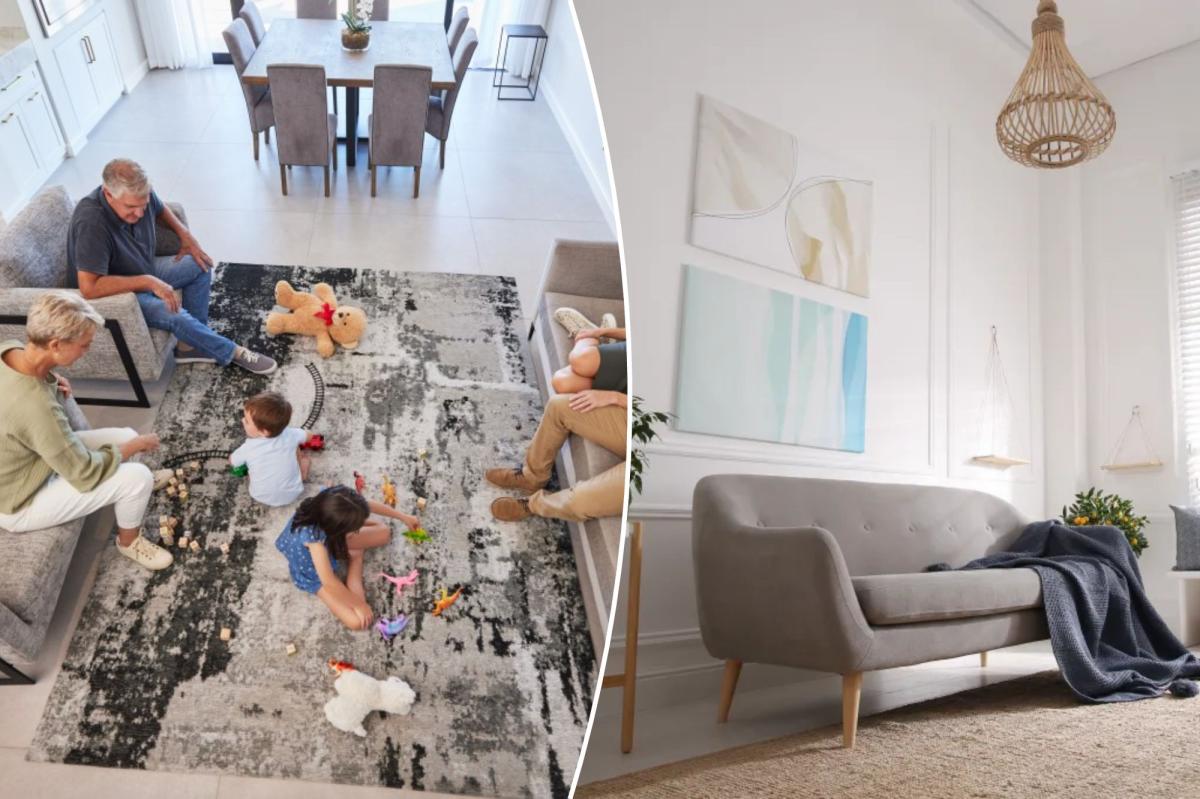
According to a survey carried out by The Harris Poll on behalf of Zillow, 66% of Americans admitted to hiding somewhere to escape a front room packed with vacation company, with practically one in 4 (23%) searching for refuge in the lavatory, despite not having any indicators of gastrointestinal misery.
Millennials are avoiding dwelling rooms this vacation season. Alexis Scholtz/peopleimages.com – inventory.adobe.com
Apparently, the most coveted actual property during the holidays is a room with a functioning lock.
Parents and in-laws were recognized as the most traumatic vacation company by 26% of Americans, adopted by siblings and their important others (21%). And 11% have thought of transferring farther away from their households altogether.
But unlike in 2005, millennials are now armed with an arsenal of remedy communicate to justify their conduct.
According to their on-line declarations of independence, these grown youngsters aren’t hiding from their moms — they’re regulating their nervous methods. They’re not avoiding drunk Uncle Keith — they’re establishing wholesome boundaries. And they’re actually not sulking in their bedrooms — they’re “protecting their peace.”
Just ask Amy Strutt, 43, of Dallas Center, Iowa, who even hides from vacation company in her own house.
“There are people everywhere else, literally everywhere,” Strutt informed The Post. “My other usual hiding place is the pantry, but hungry people come to my house so they are in and out of there, and the bedroom wins.”
More adults are discovering solace in their bedrooms during the holidays. New Africa – inventory.adobe.com
“It is my safe space, where my nervous system calms down for a few minutes, so I can come back out and actually enjoy everyone.”
And there’s some psychology behind it.
“For most millennials, retreating to their bedrooms during the holidays can be attributed to muscle memory,” John Puls, a millennial psychotherapist and adjunct professor at Florida Atlantic University, informed The Post.
“When they lived at home full time, this is where they found comfort from the chaos of family events.”
Puls, whose Boca Raton apply predominantly treats millennials, said many are also trying to keep away from parental scrutiny.
“They don’t want to be judged about where they’re living or what they’re doing for their careers,” he said.
Nothing takes the wind out of your skilled accomplishments fairly like an unsolicited efficiency assessment from your mother and father over a plate of mashed potatoes.
“Your nervous system remembers who held authority in that house long before your logical mind catches up,” Shari B. Kaplan, a licensed medical social employee and founder and medical director of Cannectd Wellness, informed The Post.
“For many millennials, that bedroom was historically the only square footage in the house where they had privacy, control, and relief from family scrutiny.”
On TikTok, some have devised even more progressive vacation survival techniques.
“Last year I attended by phone. My dad left the phone on the counter so I could hear the drama unfold while I napped on and off instead of showing up,” one commenter confessed.
Apparently, the era that normalized working remotely is now pioneering distant vacation attendance.
All the household drama, none of the emotional labor.
The disappearing act comes amid a broader cultural reckoning over familial obligations, with the Wall Street Journal not too long ago exploring the phenomenon of grownup youngsters reducing off their mother and father altogether.
But while some are going no-contact, others are apparently content material to go low-contact from the second ground, particularly if their moms would actually admire some assist unloading the dishwasher.
And while 71% of Americans ideally need a massive vacation gathering, 70% believe in a single day company should keep no more than three nights, according to Zillow.
So it’s not that they don’t need to be around their household; it just wants to be in snack-sized increments—the 100-calorie pack model of bonding.
“The key difference between regressing and regulating is intention,” defined Kaplan, who recommends proactively carving out alone time during household visits.
Strutt, meanwhile, has already perfected her technique.
“[I’m] writing this to you from the safety of my bedroom,” she informed The Post. “With the lights off so people don’t immediately know I’m in here!”
Source hyperlink